


Your morning brew asks a lot of a glass. Water just off the boil meets a cool wall, and for a moment the inside and outside are two different temperatures, the kind of sudden change that's hard on ordinary glass. Borosilicate glass was made for that moment, and it's the glass the GROUNDD xpress is built around.
What is borosilicate glass?
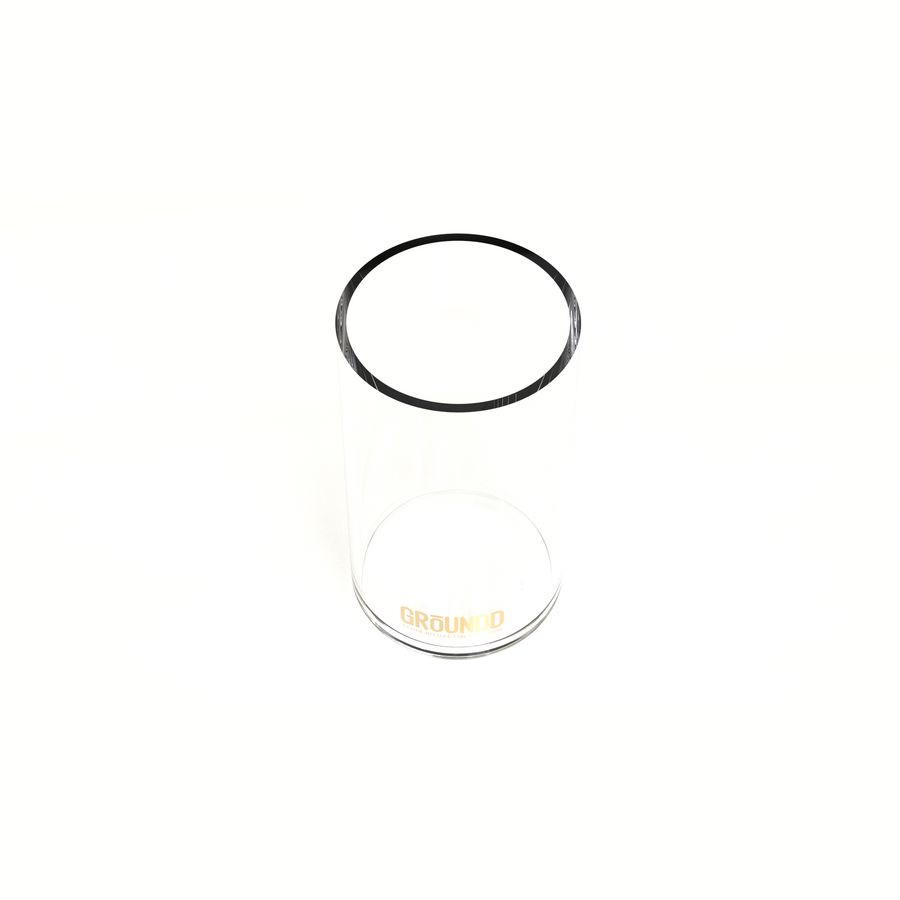
Borosilicate glass is glass made with boron oxide in the recipe. That one change helps it cope with sudden heat far better than ordinary glass, and makes it more resistant to water and chemicals.
Most everyday glass, from windows and jars to the tumblers in your cupboard, is soda-lime glass: mostly silica, which comes from sand, plus soda and lime. Borosilicate leaves out the lime, uses far less soda and adds boron oxide instead. It's the everyday glass of the laboratory, where borosilicate glassware is heated, cooled and washed day after day.
One layer deeper: a typical borosilicate is about 80 per cent silica and 12 to 13 per cent boron oxide, with a little sodium oxide and alumina. The laboratory grade is standardised as "borosilicate glass 3.3" (ISO 3585), and the 3.3 describes how little it expands when heated. German glassmaker Otto Schott developed it in 1887, and it remains the standard material for laboratory glassware.
Why does borosilicate glass suit hot coffee and tea?
Three reasons, and you'll notice each of them with the glass in your hand.
It copes with sudden heat. All glass grows a little as it warms and shrinks as it cools. Pour boiling water into a cool glass and the inside surface starts to grow before the outside catches up. Glassmakers call that thermal shock, and it's how glass cracks from heat. Borosilicate grows only about a third as much as ordinary glass for the same change in temperature, so the strain is far gentler.
It tastes of nothing. Glass is non-porous, so it doesn't soak up coffee oils or hold on to the ghost of yesterday's chai. A dark roast at dawn and a green tea after lunch each taste only of themselves.
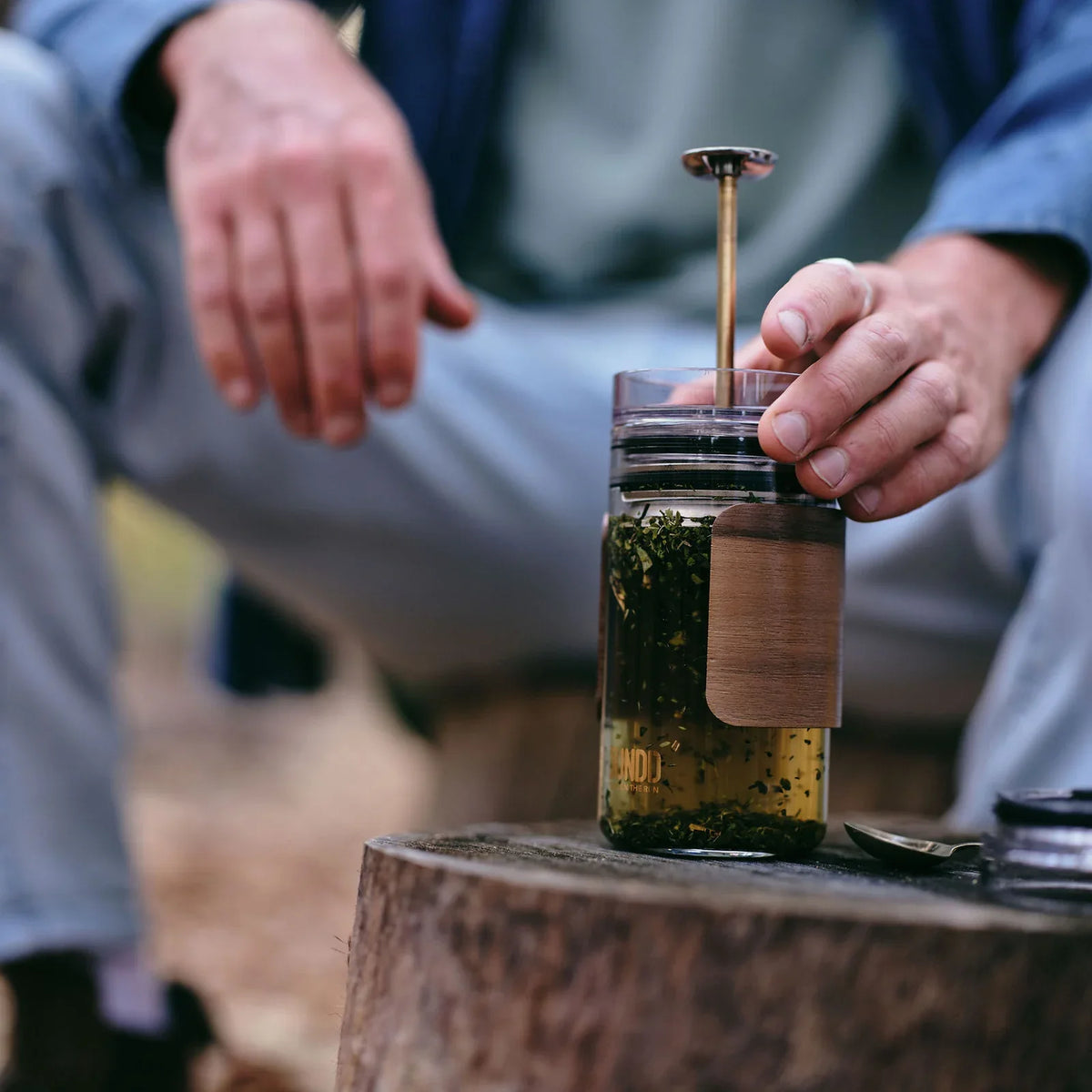
You can watch it brew. Clear glass lets you see the leaves open and the colour deepen, so you know when you're close. Press when it tastes right, and the brew pauses right there.
One layer deeper: the number behind "copes with sudden heat" is the coefficient of thermal expansion. Borosilicate glass 3.3 expands about 3.3 millionths of its length for every degree Celsius it warms. Everyday soda-lime glass expands about 8.5 to 9.5 millionths, roughly three times as much. As glassmakers put it, the lower the expansion, the better a glass resists sudden temperature change. Laboratory borosilicate also rates in the top class of five in the standard test for resistance to water (ISO 719).
Borosilicate vs regular glass: what's the difference?
The difference is the recipe, and it shows most when things get hot. Ordinary soda-lime glass is inexpensive, easy to shape and perfectly good at being a glass. Its weak spot is sudden heat: because it expands about three times as much, a pour of boiling water puts it under much more strain.
A lot of the heat-resistant glass kitchenware on shelves today is tempered soda-lime rather than borosilicate. Tempering is a heat treatment. The glass is heated, then cooled quickly, which locks its surface in compression and makes it harder to break with a knock. It's a real improvement, but it doesn't change the recipe underneath. Iowa State University's extension service sums up the trade-off: tempered soda-lime copes better with being dropped, while borosilicate copes better with heat.
Borosilicate is also the more chemically resistant of the two, which counts for something that holds hot liquid and gets washed every day. For a glass that meets water off the boil every morning, it's the natural choice.
Is borosilicate glass safe to drink from?
In short, yes. Borosilicate is among the most chemically resistant glasses made, which is why laboratories rely on it for glassware and why it's used for many medicine vials and syringes. The United States Pharmacopeia classes it as Type I glass, for its high resistance to water.
That doesn't make it magic. No material is perfectly inert, and in sensitive laboratory tests even borosilicate can release trace amounts of its own ingredients, measured in parts per million or less. It simply gives away less than ordinary glass, and high-grade laboratory borosilicate won't add heavy metals such as lead to what it holds.
The GROUNDD glass is made from lead-free virgin materials, and being glass, there's no plastic in it. The one caveat is the same as for any glass: if it chips or cracks, stop using it. Damaged glass is weaker and more likely to break.
How do you look after borosilicate glass?
A few easy habits go a long way.
- Wash it gently. The GROUNDD glass is dishwasher safe, as are the Tritan lid and stainless steel filter. Keep the plunger, skirt and walnut sleeve out of the dishwasher. Day to day, a rinse and warm soapy water is all the glass needs, and saving the dishwasher for an occasional deep clean helps the gold logo last.
- Skip the scourers. Use a soft sponge or brush. Every scratch is a small weak point, and a scratched glass is more likely to break, especially when it's heated.
- Avoid the extremes. Borosilicate handles a hot brew far better than ordinary glass, but no glass likes a shock. Don't go straight from freezer-cold to boiling, and don't run cold water over a hot glass.
- Give it room. A crowded sink or dishwasher rack is where glass meets hard edges. A little space and a rubber sink mat help.
- Replace, don't risk it. If the glass chips or cracks, swap in a new Borosilicate Drinking Glass and keep the rest of your cup. Cleaning notes for every part are in our FAQs.
Why does GROUNDD brew in borosilicate glass?
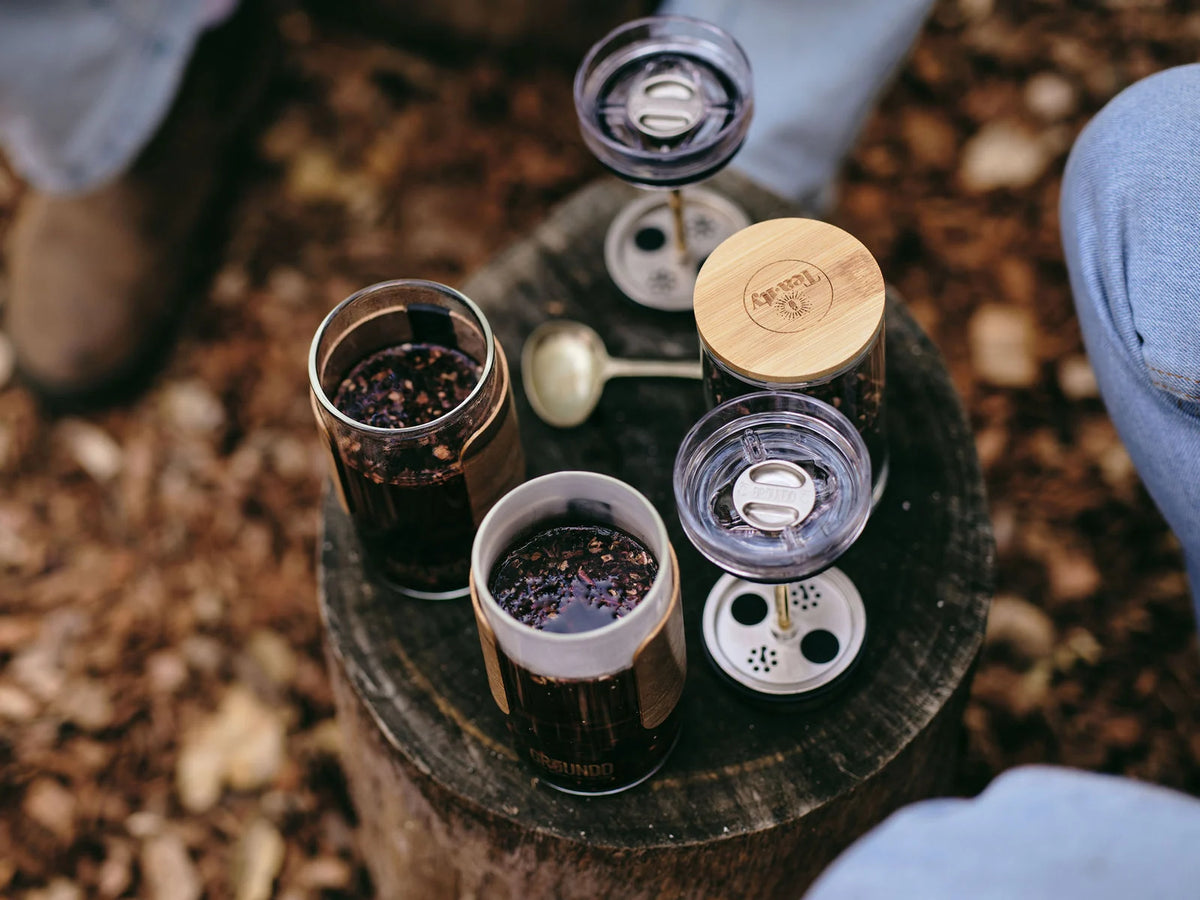
The GROUNDD xpress is a borosilicate glass cup you brew in and drink from. Add grounds or loose leaves, pour in water just off the boil, and press the plunger to pause the brew when it tastes right, then drink from the glass it brewed in. That's a lot to ask of one glass, every morning, whether it's on the kitchen bench, in the car, at camp or on a cold headland.
So we started with borosilicate, the same glass used in lab equipment, and made ours thicker to improve its toughness. Each glass is hand-blown by artisans from lead-free virgin materials. It holds 355 ml (12 oz), and it's close to the width of a drink can, so it fits virtually every car cup holder.
And because every part of the xpress is sold on its own, a cracked glass never ends the cup. Under the GROUNDD Forever Guarantee, a part that fails through a manufacturing defect is replaced for up to five years, and replacement parts stay available for the years of use beyond that. If your glass meets the tiles, you replace the glass, not the whole thing. It's the idea behind the O in our logo: something made once, looked after, and repaired rather than thrown away.
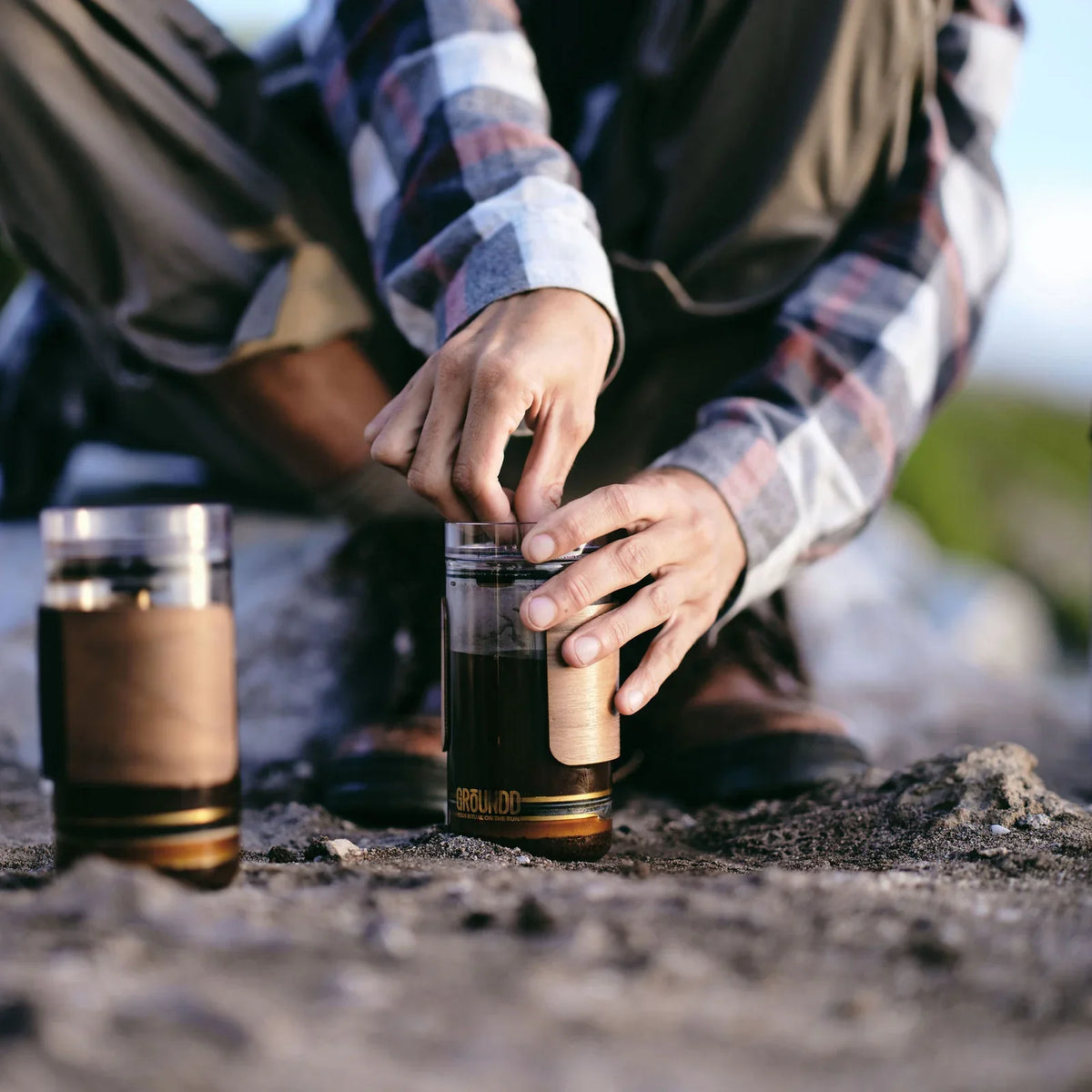
If a slower, clearer morning ritual appeals, have a look at the GROUNDD xpress: real coffee or loose-leaf tea, brewed in borosilicate, paused when it tastes right, and drunk from the same glass. Brew, pause, drink.
Frequently asked questions
Can you pour boiling water into borosilicate glass?
Yes. Borosilicate copes with sudden heat far better than ordinary glass, and the GROUNDD xpress is designed to brew with water just off the boil. Like any glass, it has limits: avoid going from freezer-cold to boiling, and retire a glass that's chipped or cracked.
Is borosilicate glass unbreakable?
No. No glass is. Borosilicate resists sudden heat well, and ours is made thicker for extra toughness, but a hard knock or a drop onto tiles can still break it. That's why the glass is sold on its own.
Is borosilicate glass lead-free?
Standard borosilicate recipes don't use lead as an ingredient. Lead belongs to lead crystal, a different family of glass. The GROUNDD glass is made from lead-free virgin materials.
Can borosilicate glass go in the recycling bin?
Usually not. Planet Ark's Recycling Near You advises keeping drinking glasses and ovenproof glass out of the kerbside bin unless your council says otherwise, because this kind of glass melts at a higher temperature than bottles and jars. Citing the recycler Visy, it notes that as little as 15 grams per tonne can send a whole tonne of good glass to landfill. One more reason to keep a glass for years and replace only what breaks.
Where can I buy borosilicate drinking glasses in Australia?
Right here. Our hand-blown Borosilicate Drinking Glass is sold on its own, as a spare for your xpress or simply as a glass for the cupboard, alongside every other xpress part in our spare parts collection.
